
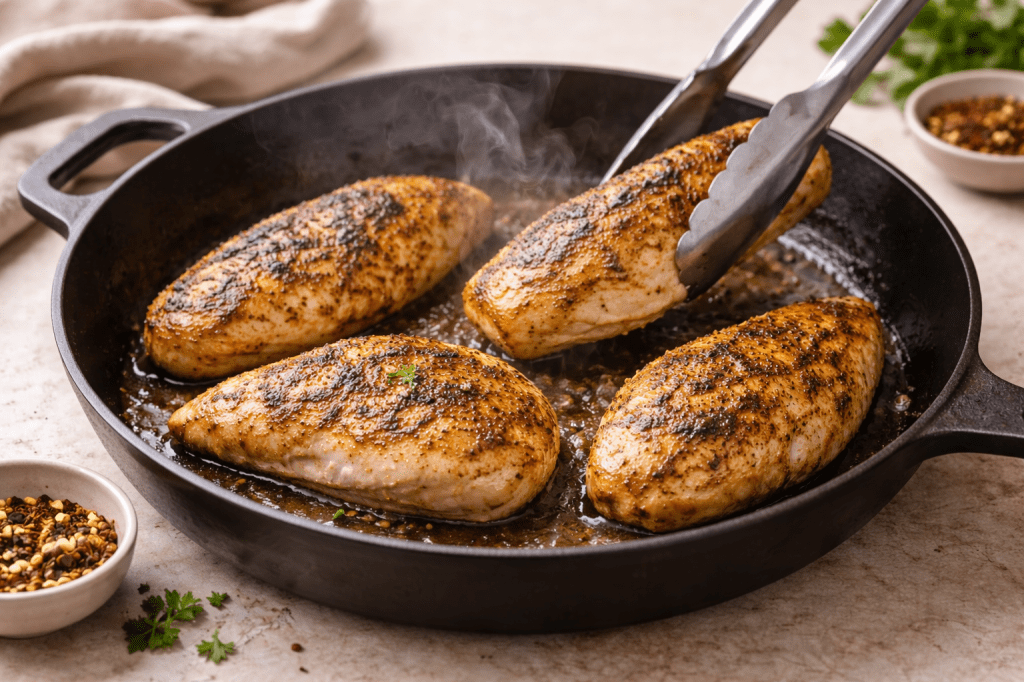
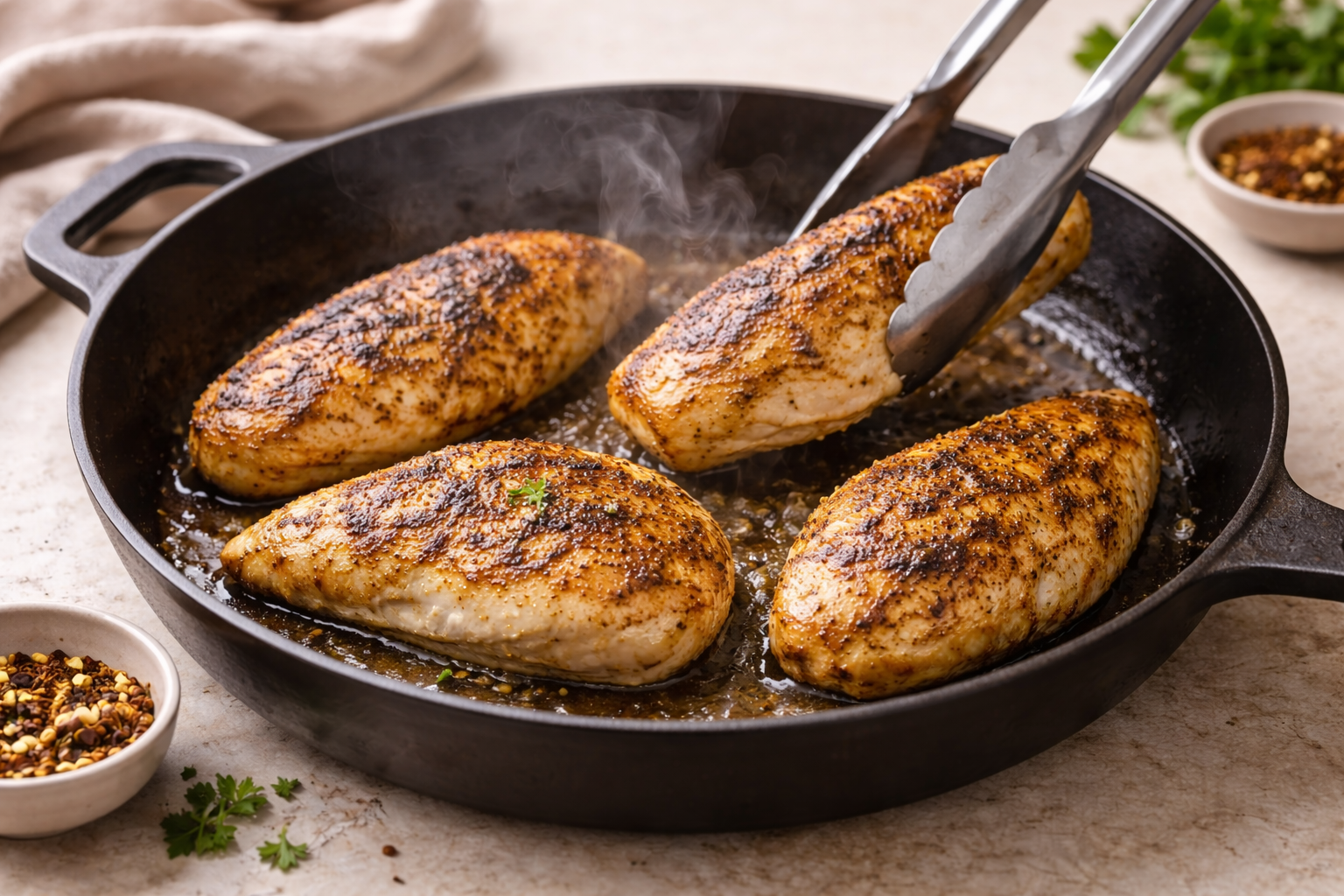
Dry chicken usually isn’t a recipe problem. It comes down to a few small mistakes that affect texture and moisture.
Once you control heat, timing, and a few key steps, chicken becomes consistently juicy and much easier to cook well.
You’re Overcooking It
This is the most common issue.
Chicken keeps cooking slightly after it’s removed from heat. If you wait until it looks fully done in the pan, it’s already gone too far.
Remove it as soon as it’s just cooked through. The residual heat will finish the job without drying it out.
Your Heat Is Too High
Cooking on high heat can brown the outside too quickly while the inside is still catching up.
This creates dry edges and uneven texture.
Use medium heat so the chicken cooks evenly and stays controlled.
You’re Not Letting It Rest
Cutting into chicken right away releases the juices.
Let it rest for a few minutes after cooking. This allows the juices to redistribute and keeps the meat moist.
You’re Using Very Lean Cuts
Chicken breast cooks quickly and has less fat, which makes it easier to dry out.
Chicken thighs are more forgiving and stay juicy even if slightly overcooked.
Use thighs when you want more consistent results.
You’re Skipping Fat or Marinade
Cooking chicken without enough oil or a light marinade can lead to dryness.
Fat helps retain moisture and improves flavour at the same time.
Even a simple mix of oil, salt, and spices makes a noticeable difference.
Key Takeaway
Juicy chicken doesn’t require complicated techniques.
Control the heat, avoid overcooking, and let it rest. These small adjustments are what turn average chicken into something consistently good.
 My Comfort Kitchen