
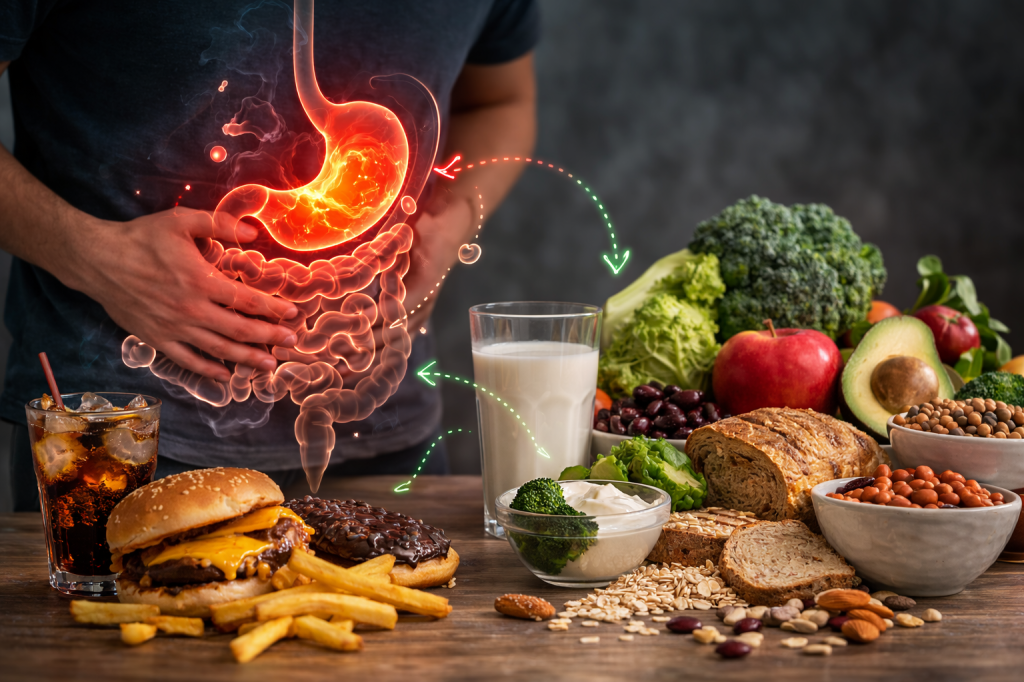
Many people notice that some meals feel light and comfortable while others leave them feeling heavy or uncomfortable. The difference is often related to how the body processes certain ingredients and cooking methods.
Understanding a few basic factors can help explain why some foods are easier to digest than others.
Fat Content
Foods that contain large amounts of fat often take longer for the body to digest. Rich sauces, fried foods, and very heavy meals may slow digestion and create a feeling of heaviness after eating.
Using moderate amounts of healthy fats such as olive oil can help meals feel satisfying without becoming overly heavy.
Cooking Method
How food is cooked can influence how easy it is to digest. Frying and very high heat cooking methods can make meals heavier, while roasting, grilling, or gentle sautéing often create lighter results.
Cooking vegetables until they are tender can also make them easier for the body to process.
Portion Size
Large meals can overwhelm digestion. Even healthy ingredients may feel heavy when eaten in large portions.
Balanced portions allow the body to process food more comfortably.
Ingredient Balance
Meals that combine protein, carbohydrates, and vegetables often feel more balanced than dishes that focus heavily on one ingredient.
For example, a plate that includes grilled chicken, rice, and vegetables may feel lighter than a dish that relies mostly on rich sauces or heavy starches.
Eating Pace
Eating too quickly can make digestion more difficult. Taking time to chew food properly helps the body begin the digestive process before the meal even reaches the stomach.
Simple Cooking Often Feels Better
Meals made with simple ingredients, balanced portions, and moderate cooking methods tend to feel lighter and more comfortable.
Paying attention to these factors can help create meals that are satisfying while still feeling gentle and balanced.
 My Comfort Kitchen