
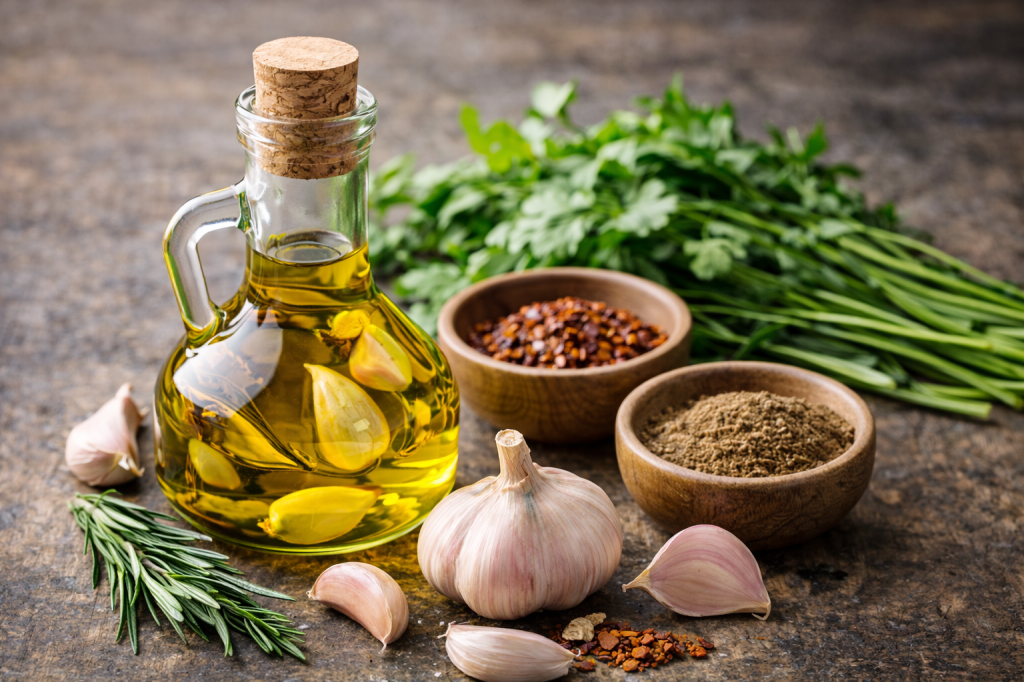
Cooking without garlic or onion can feel frustrating at first. These ingredients form the flavour base of many dishes, so removing them often makes food taste flat. But flavour does not depend on garlic and onion alone. With the right ingredients and techniques, meals can still taste rich, balanced, and satisfying.
Why Cooking Without Garlic or Onion Is Difficult
Garlic and onion are commonly used because they provide a strong savoury foundation. When they are removed, many recipes lose their natural base flavour. This is why dishes can sometimes taste bland if nothing replaces that depth. Instead of relying on these ingredients, flavour must be built using other elements such as oils, spices, herbs, and acidity.
How to Rebuild Flavour
Cooking without garlic or onion requires a different approach. Instead of depending on one ingredient, flavour is created by layering different components. Oils carry aroma, spices add warmth, citrus adds brightness, and herbs provide freshness. When these elements are combined correctly, dishes can become just as satisfying as traditional recipes.
Garlic-Infused Oil
Garlic-infused oil is one of the easiest ways to add garlic flavour without using whole garlic. The oil absorbs the aroma of garlic, while the compounds that cause digestive problems remain in the solid pieces that are removed. This makes garlic-infused oil a useful ingredient for cooking meats, vegetables, sauces, and marinades.
Citrus
Citrus helps brighten flavours and prevents dishes from feeling heavy. Ingredients such as lemon juice and lemon zest add freshness and balance. Citrus is usually added near the end of cooking so its flavour stays clean and vibrant rather than becoming bitter.
Warm Spices
Spices play an important role in building flavour. Ingredients like cumin, coriander, paprika, cinnamon, and seven-spice blends create warmth and depth. Instead of adding large amounts at once, spices are often layered gradually during cooking so their flavour develops more naturally.
Fresh Herbs
Fresh herbs bring brightness and contrast to a dish. Parsley, dill, cilantro, and green onion tops are commonly used because they add freshness without overpowering the meal. Adding herbs at the end of cooking helps keep their flavour and colour vibrant.
Final Thoughts
Cooking without garlic or onion may seem limiting at first, but it can also open the door to new ways of building flavour. By using infused oils, citrus, spices, and fresh herbs, meals can remain satisfying and full of character. Many of these techniques appear throughout my cookbook, where they are used to create simple everyday recipes designed to be flavourful and gentle on digestion.
 My Comfort Kitchen